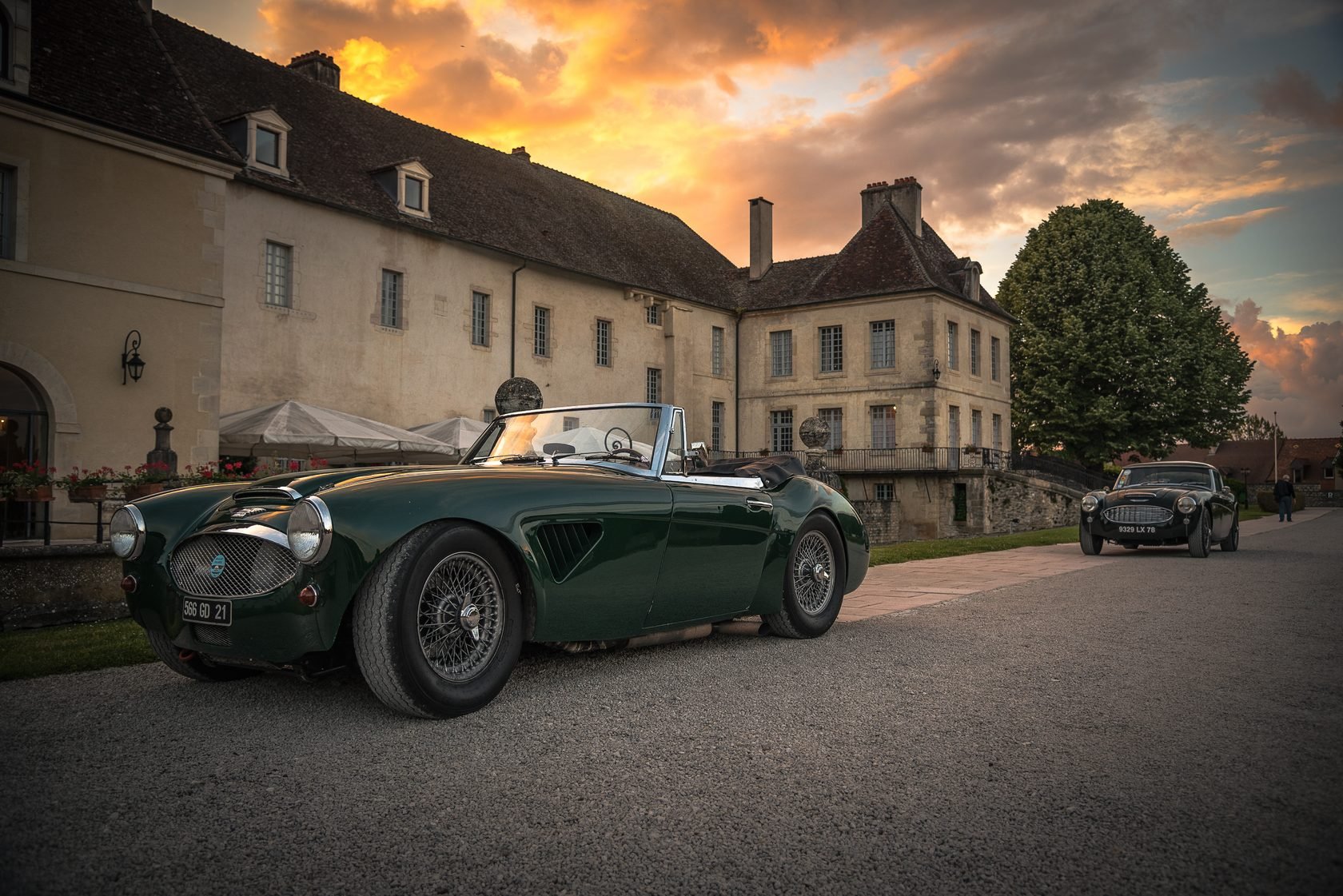
LUXURY: Dream, Art, Freedom
When it comes to luxury, competition doesn't play out at the level of function — it plays out at the level of symbols. People buy not what a product does, but what it means. And it's the brand that gives a product its meaning — through functional and emotional benefits: performance, safety, durability, status, pleasure, refinement. Remove the brand, and you're left with an object. Keep the brand, and you're left with a dream.
In Luxury, the Brand Isn't Secondary — It's Decisive
Brands matter in every industry because they carry values and meaning. But in luxury, they hold not just importance but decisive weight, directly securing profit and prosperity.
What Luxury Actually Is
Luxury is a very old concept, and the debate over its nature began long before modern marketing. Some saw it as pointless spending. Others saw it as a powerful engine of artistic and technical discovery that gradually spread through society and, eventually, benefited everyone.
The past century brought a notable democratization of luxury. The industry grew from $80 billion in 1995 to $800 billion in 2013 — tenfold in under twenty years. But this is exactly where a paradox lies, one that still defines the industry's fate today: elite brands always face the same challenge — finding the balance between too few clients to sustain profitability and too many, which erodes exclusivity.
Luxury Isn't Easy — Neither Is Art
In their book The Luxury Strategy, Jean-Noël Kapferer and Vincent Bastien describe the luxury market as a three-tier pyramid:
- Luxury as status confirmation — a symbolic desire to belong to a higher class; the codes of luxury are cultural in nature, and the client has to be able to read them
- Luxury for friends — a choice made according to a very specific social code: an art collection shown to a select few, or a bottle of champagne brought to a party
- Luxury for oneself — access to pleasure with a strong personal, hedonistic dimension; without it, it is not luxury but simple snobbery
But no luxury brand can hope to survive relying solely on clients who care only about the symbol. People who care only about the sign will always drift from one logo to the next — there's no loyalty here, because there's no attachment to the substance.
Key Insight
A luxury brand is a cultural object, which is exactly why it must proclaim its own deep truth. Snobs may make up a significant share of a luxury brand's clientele, but they can never be its foundation. A true luxury brand rests on a core of devoted clients who are steeped in the brand's culture and who value its world, its personality, its philosophy.
Those who genuinely know how to enjoy luxury understand that the key concept here is dream, not envy. It's not just, or even mainly, about money — it's about a culture of consumption, an understanding of value, history, the craftspeople who make the product with their own hands. That's exactly why luxury is not easy to obtain — and no less difficult to understand. In the end, much like art itself.
Art as the Guarantee of Luxury, Luxury as the Patron of Art
Luxury and art are so tightly linked that it seems almost impossible to fully separate them. Both concepts trace back to the very origins of humanity: many objects found in early tombs are simultaneously works of art and objects of luxury. Both share a common property — the value of aesthetics and the capacity to appreciate over time, while practical benefit is secondary for both.
There is still a difference: a maker of luxury goods, as a rule, lives off selling their work throughout their life, while an artist often exists in a state of permanent survival. But in today's world, the luxury industry increasingly becomes a means of material existence for the artist — sculptor Serge Mansau, for example, also designs bottles for fine perfumes.
A telling example of this interplay is the story of Chanel. In 1997, the house founded a subsidiary called Paraffection — a collective of independent ateliers that were, at the time, barely surviving. Buying them out allowed these workshops not only to survive, but to fully come into their own.
- Each atelier supplies Chanel and receives financial investment from the brand, while remaining independent and free to work with competing fashion houses
- Some of these ateliers have more than a thousand years of craft history
- A single haute couture dress can involve a team of 200 people working roughly 2,000 hours
- The real value of the project lies not in profit, but in brand identity: Paraffection stands as a symbol of Chanel philosophy and a confirmation of the house belief in traditional craftsmanship
Unethical Luxury Stops Being Luxury
More and more clients are concerned about the ethics of luxury — and this isn't a side trend, it's part of the definition itself. The purpose of luxury is to contribute to social wellbeing and general happiness, not to work against them.
Ethics, sustainability, and idealism are at the heart of the philosophy at Kering, the group behind Balenciaga, Saint Laurent, Brioni, and other prestigious houses. Marie-Claire Daveu, the group's chief sustainability officer, puts it bluntly: there isn't much time left to genuinely shift the paradigm.
2025–2026 Update
This position isn't decorative: between 2022 and 2025, Kering cut its own emissions by 34% across all covered scopes, including its supply chain. In September 2025, Luca de Meo — previously head of Renault — became Kering's CEO, while François-Henri Pinault, who led the company for two decades, stayed on as chairman of the board. Marie-Claire Daveu publicly confirmed that the sustainability course isn't being paused — on the contrary, it's now more important than ever to show investors that this is a matter of long-term viability, not just ethics.
The Rules of the Game, According to Jean-Noël Kapferer
Jean-Noël Kapferer — one of the world's few leading experts on luxury brand management — lays out several principles in his article "The Luxury Business Model" that are worth treating as a practical framework rather than just a list of tips.
- Never outsource production — one of the defining traits of a genuine luxury brand
- No mass advertising, including celebrity endorsement — luxury sells itself through communication, not reach
- Reach the "non-target" audience — the way Aston Martin does: James Bond drives one, but everyone recognizes it on the street
- Control 100% of the value chain — from sourcing raw materials to retail
- No licensing — it inevitably dilutes the brand and erodes exclusivity
- Constantly raise the average price — a luxury brand should never haggle or discount
- Build direct, individual relationships with clients — treat every client like a VIP
The Market Today: Narrowing as Proof of the Theory
Checking these principles against recent data reveals a telling picture.
This isn't a crisis — it's the correction that Kapferer and Bastien anticipated when they wrote about the balance between too few and too many clients. The market is literally returning to its core, to those who genuinely understand the cultural code rather than chasing a logo. And the same crisis of indistinguishability is felt most acutely here: 70% of buyers are dissatisfied with the in-store experience. Luxury built solely on symbol, without a deep cultural truth behind it, is the first to lose its power when the market narrows to its most discerning core.
The Future Is Freedom
Experts agree: luxury today is different from what it will be tomorrow. In an era when everyone and everything is constantly on display, people crave the opposite — freedom and privacy. A Harris Poll study among American millennials back in 2018 found that 78% said they'd rather spend money on an experience than on buying a desired object. And that trend hasn't faded — it has intensified: more recent surveys among Gen Z and millennials in the UK show that 58% choose spending on experiences over physical goods.
As The Business of Fashion notes, experience — not products or goods — has become the primary "currency" for today's young people. Status is measured less and less by what you have, and more and more by where you are and what you're doing.
An interesting counter-movement appears here: Gen Z, the most "digital" generation of all, is beginning to return offline — not for the object itself, but for the experience of presence. This doesn't contradict the thesis about freedom and experience — it extends it: physical luxury retail is once again becoming part of the dream, not just a shop window for an online catalogue.
Freedom is becoming the defining meaning of luxury — a status marker in its own right. The freedom to live and work wherever you want. The freedom to leave the country whenever you choose. Freedom from debt and loans. The freedom to have a partner without children — or children without a partner.
And most importantly — the freedom to be yourself. That kind of luxury, as ever, isn't available to everyone.
READY TO BUILD YOUR ARCHITECTURE OF FREEDOM?
Camino a España builds a multi-jurisdictional life for those who understand: true luxury isn't ownership — it's the freedom to live, work, and be yourself wherever you decide.
Request a Consultation →Based on the original publication by Anastasiya Legeda Rodriguez, BBI brandbigidea. Updated and expanded with 2025–2026 research and data (Bain & Company, Kering, American Express).